
What “That HVAC Guy” is
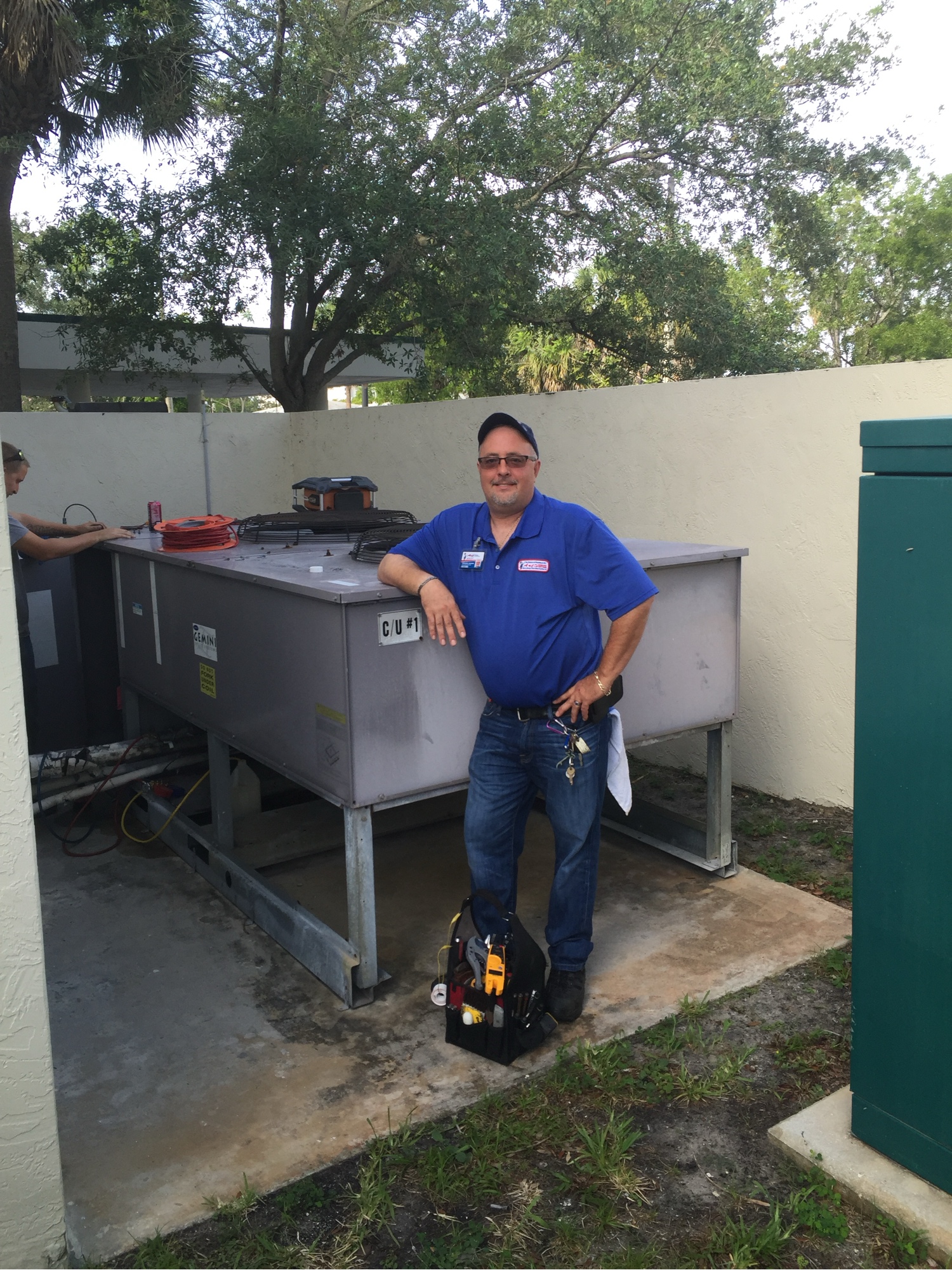
I've spent a career on commercial roofs. Tearing out dead packaged units, fighting curbs that don't line up, talking owners through whether to pour money into a 17-year-old unit or replace it. Most people never see any of it — they walk past the equipment that keeps a building alive and never give it a thought. So I started bringing a camera up there. That's That HVAC Guy: the real job, on camera, the way it actually is — crane days, swaps, old iron with a story, no script and no hype.
The other half is the RTU Swap playbook. Every HVAC calculator and “how-to” online is built for the residential side — Manual J, a 3-ton split, a house. Nobody was building the thing a commercial estimator actually needs standing next to a 10-ton rooftop unit with a customer waiting on a number. So I built it: fast tools, honest guides, and the hard-won judgment that doesn't show up in a textbook.
This isn't repackaged manufacturer literature or generic AI content. It's 25 years of jobs that went clean and jobs that went sideways — filmed in the field and distilled into tools and write-ups you can use on the roof today.
Where this comes from
I've spent 25+ years in the mid-Atlantic HVAC trade — Maryland, Pennsylvania, Delaware, Virginia and Florida — and these days I work as a heavy commercial estimator. Over the years that's meant a lot of different work: refrigeration for grocery and food service, residential comfort, and the commercial rooftop replacement work that became my specialty. Five states means five different permitting realities — including Florida's hurricane tie-down rules — a dozen different AHJs, and every brand of packaged unit you can name sitting on every kind of curb. RTU Swap is my own independent project — built on my own time, drawing on that experience. It isn't affiliated with my employer.
That range is exactly why the commercial side is hard to learn from a book. The unit on the roof in a Baltimore strip mall, the one over a Lancaster County restaurant, the one on a Northern Virginia office, and the one that has to ride out a hurricane on a South Florida retail box — they're all "rooftop units," and they're all different jobs. You learn it by doing it, over and over, for years.
What 25 years on the roof teaches you
- The unit price is half the job. The curb, the crane, the electrical, the structure, and the permit are where the money actually goes — and where estimates go wrong.
- History beats theory on a replacement. A unit that's been running in a building tells you more about the real load than any rule of thumb.
- The honest number wins the job. Owners can smell a sales pitch. Give them the real math and they buy; sell them a unit and they fight you on every line.
- Plan the crane once. Every avoidable second trip eats a day and a margin. The whole game is doing it right the first time.
Who this is for
Commercial HVAC contractors and estimators who do RTU swaps and want to bid them faster and tighter. Facility and property managers who need to make a defensible replace-or-repair call. And the younger techs coming up who can wire a residential split in their sleep but haven't yet learned the commercial rooftop game. If that's you, the tools and the guides are yours, free.
Where it's going
The free tools and guides stay free. On top of that I'm building a Pro toolkit — the estimating spreadsheets, curb cheat-sheets, and permit playbooks I built for my own crew, cleaned up for yours. If you do this work every week, join the waitlist and help shape what gets built first.
RTU Swap is an independent knowledge resource created by Gregory Frazier. It is not affiliated with, endorsed by, or sponsored by any employer or equipment manufacturer. Tools provide preliminary estimates only — see the disclaimer below.