
This is the kind of job that makes the whole replace-vs-repair argument easy. I've written before about the honest math of when to replace a unit — the 50% rule, the rising refrigerant costs, the age curve. This unit hit every one of them at once.
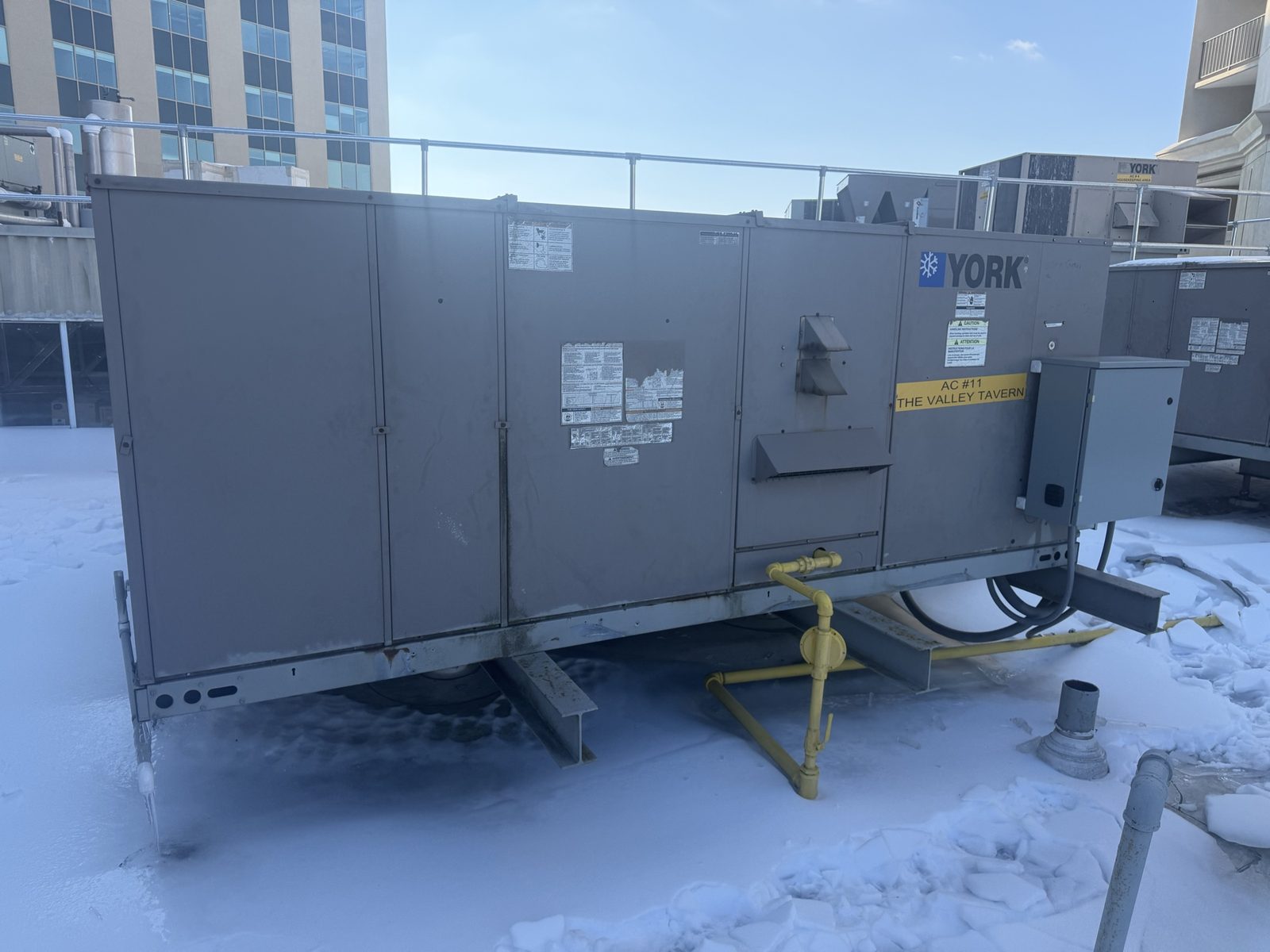
What we're looking at
This is a York packaged gas/electric rooftop unit. I pulled the nameplate before we scheduled the lift, because the nameplate decides the job — not a guess from the ground.
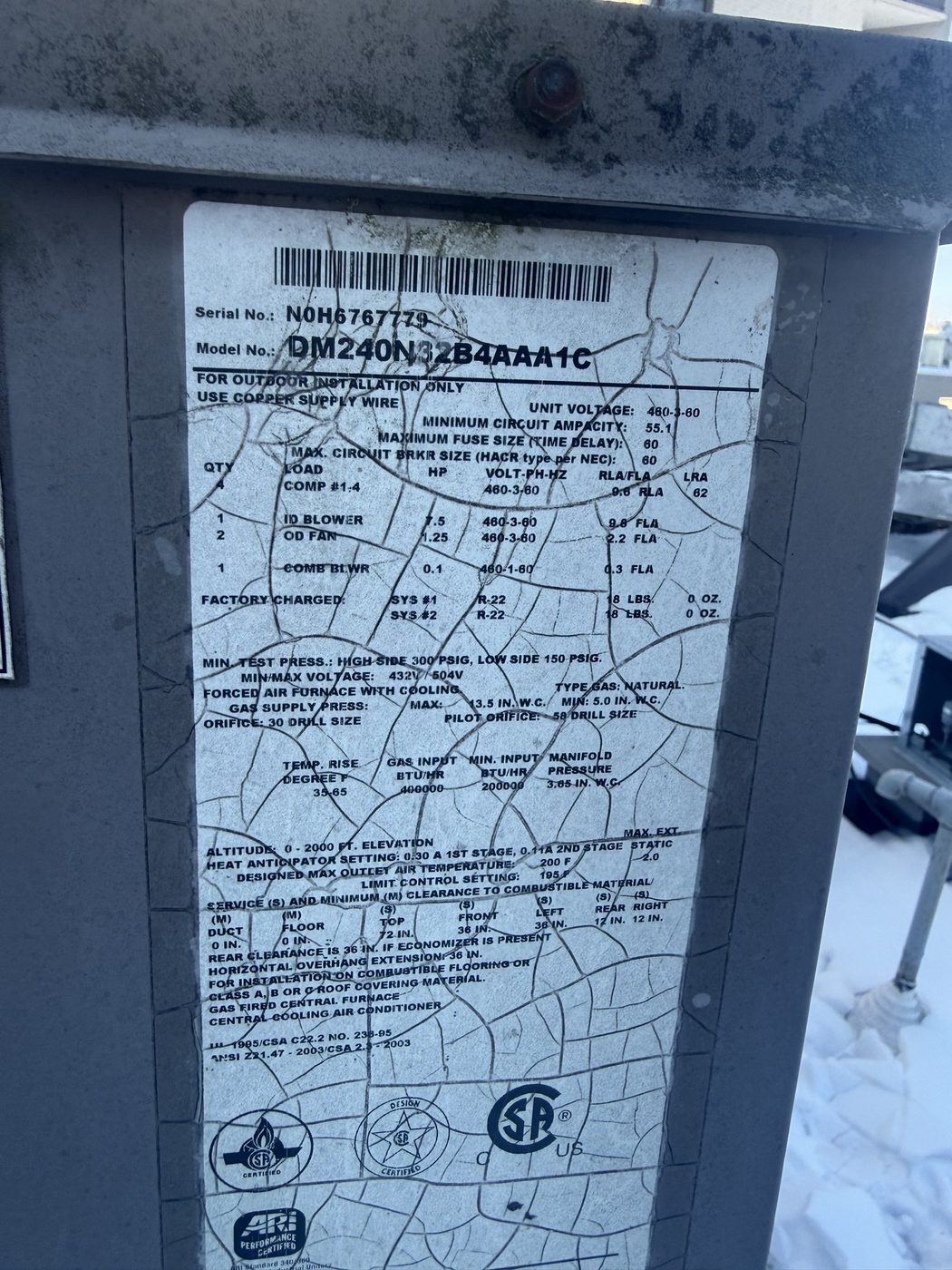
Here's what that plate tells you, and why each line matters:
- 20 tons of cooling. The "240" in the model number is 240,000 BTU nominal — 20 tons. Two-stage, dual-compressor.
- R-22 refrigerant. Factory charged 18 lbs per circuit, both circuits. R-22 — not even R-410A. This is the generation before the generation that's now being phased out.
- Built around 2010. The serial date code puts her at roughly 16 years old. Right in the 15-to-20-year window where the cabinet, coils, and controls all start coming due at the same time.
- Gas/electric, 460V three-phase. 400,000 BTU gas input furnace. So the swap isn't just refrigerant and power — there's a gas line and a flue to deal with too.
Why this one gets replaced, not repaired
People hear "just fix it" and think repair is the cheap option. On a unit like this, repair is the expensive option — you just pay for it in installments.
The killer is the R-22. The EPA phased out production and import of R-22 years ago, so what's left is recovered and reclaimed refrigerant, and the price reflects it. A recharge that cost a few hundred dollars a decade ago can run $2,400 to $4,800 today for a unit this size — and that's before you fix whatever made it lose the charge in the first place. Put a leak on one of these circuits and you're staring at four figures just to put gas back in a 16-year-old box.
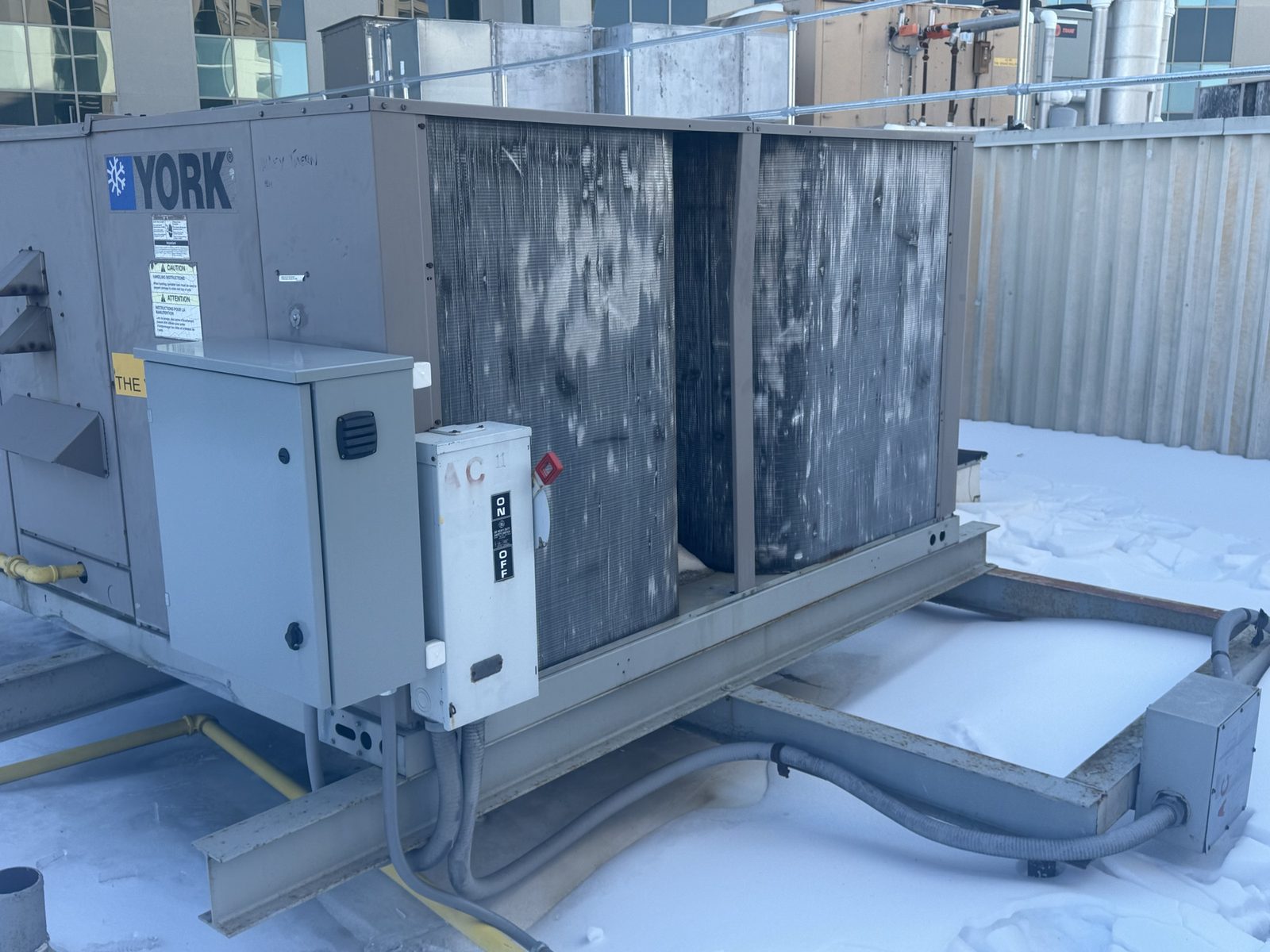
Now stack the rest of it on top of the refrigerant problem:
- Age. At 16 years, you're past the point where one repair buys you confidence. Fix the compressor and the board goes. Fix the board and the other compressor goes.
- Efficiency. A 2010 unit is burning meaningfully more electricity for the same cooling than anything new. On a space that runs as hard as a tavern, that gap shows up on the bill every month.
- The 50% rule. A compressor on a 20-ton unit, plus the R-22 to refill it, gets you uncomfortably close to half the cost of a new unit — on equipment that's already on borrowed time.
When the refrigerant alone can cost four figures, the repair-vs-replace argument is already over.
If you've got an aging unit and you're trying to decide, the replace-vs-repair calculator walks the same logic I just did here — repair cost against replacement cost, with the age and refrigerant factors built in.
Why it takes a 100-ton crane
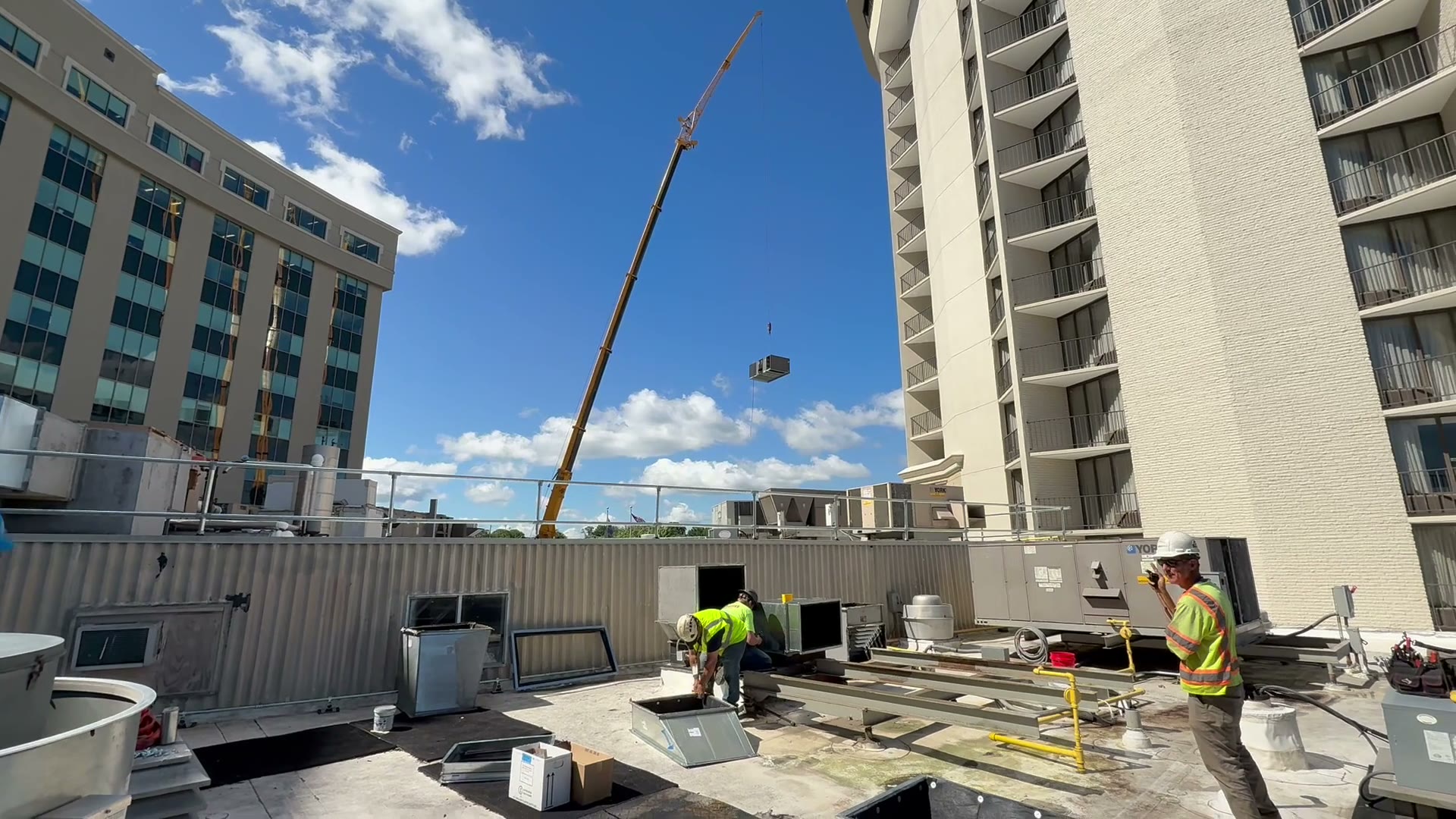
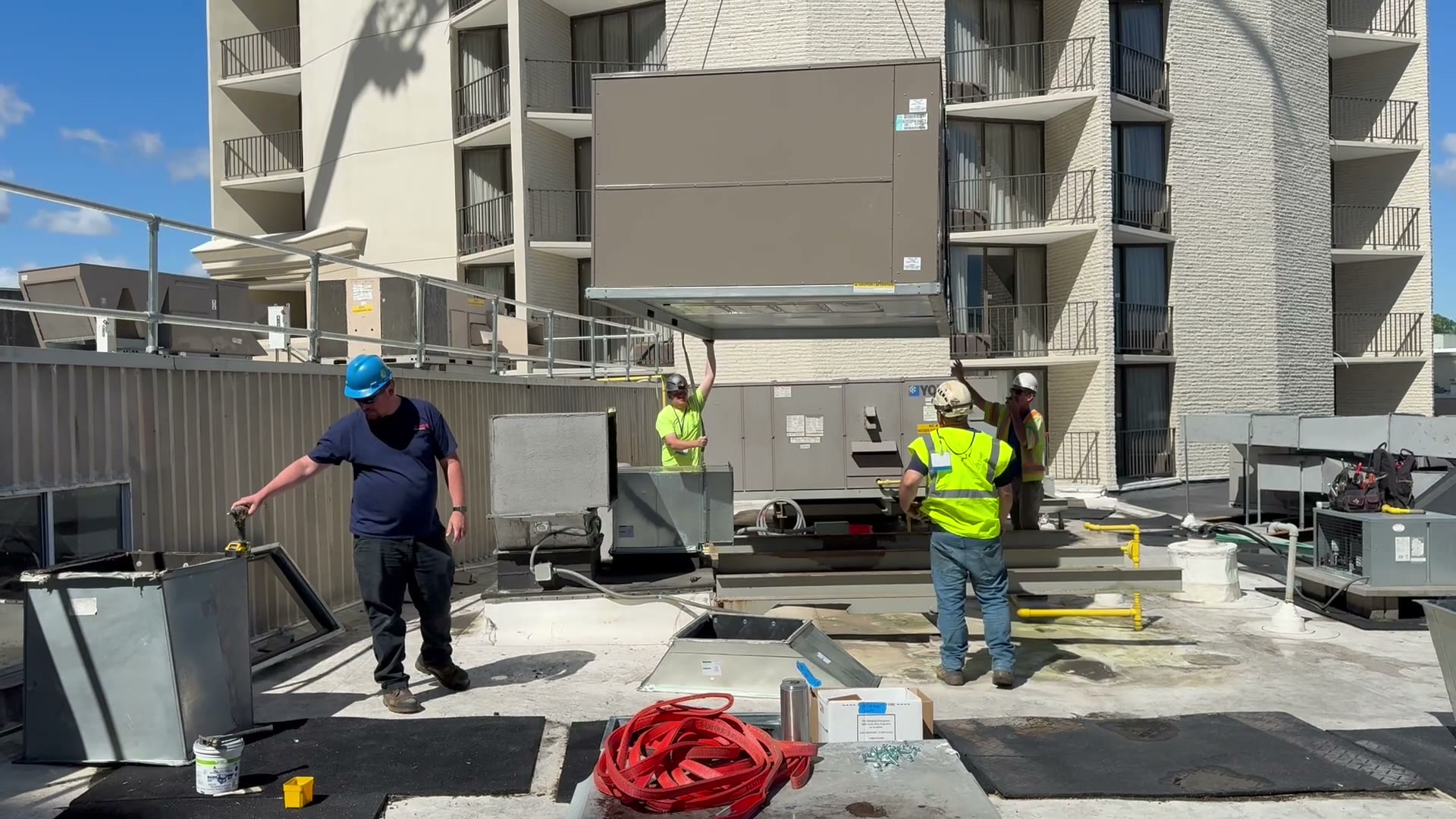
A 20-ton unit isn't something you slide off the roof. The unit itself is heavy, it's sitting up on steel dunnage over the curb, and the casino is a tall building — which is the real reason for the big iron.
Crane size isn't about the weight of the unit alone. It's about weight times reach. The farther the crane has to reach — over the edge of the building, up and across the roof to where the unit sits — the more capacity you need to do it safely. A heavy unit on top of a tall casino, set back from the edge, is exactly the situation that turns a "small" lift into a 100-ton-crane job. The number on the crane is the safety margin, not the unit weight.
Watch the lift
Here's the whole thing from up on the roof — rigging the old unit, the pick, the descent, the set, and the crew that did it. Sound's on; that's the real job, not a soundtrack over a slideshow.
The takeaway
If you're sitting on an R-22 unit that's pushing 15 years, this is your sign. You're not saving money by nursing it — you're spending money slowly and then spending the replacement money anyway when it finally quits on the hottest day of the year. The smart move is to plan the swap on your schedule, not the unit's.
That means getting the model numbers, sorting the curb and gas and electrical ahead of time, and booking the crane before peak season when the good operators are slammed. Do the homework, and crane day is the easy part.
About the author: Gregory Frazier is a heavy commercial HVAC estimator working Maryland, Pennsylvania, Delaware, Virginia and Florida for 25+ years. Read his story →