
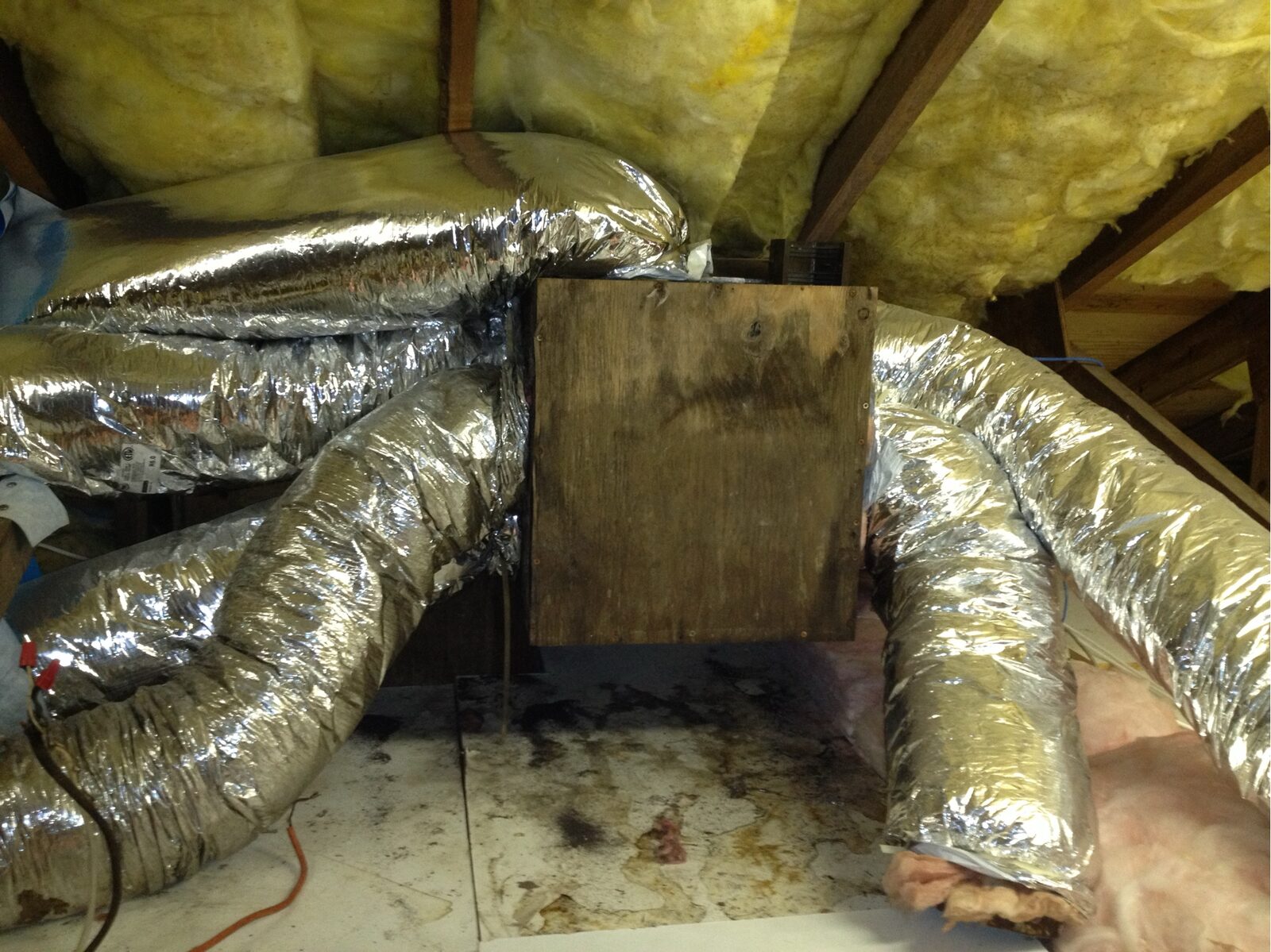
The call usually goes like this. "Do you clean ducts?" Yes. "Great, come clean mine." First we need to set up an evaluation. "Why do I need an evaluation — I just want them cleaned!" And that's exactly where we have to slow down, because whether your ducts can even be cleaned depends entirely on what they're made of and how old they are. Pour a cleaning into the wrong system and you can do more harm than good.
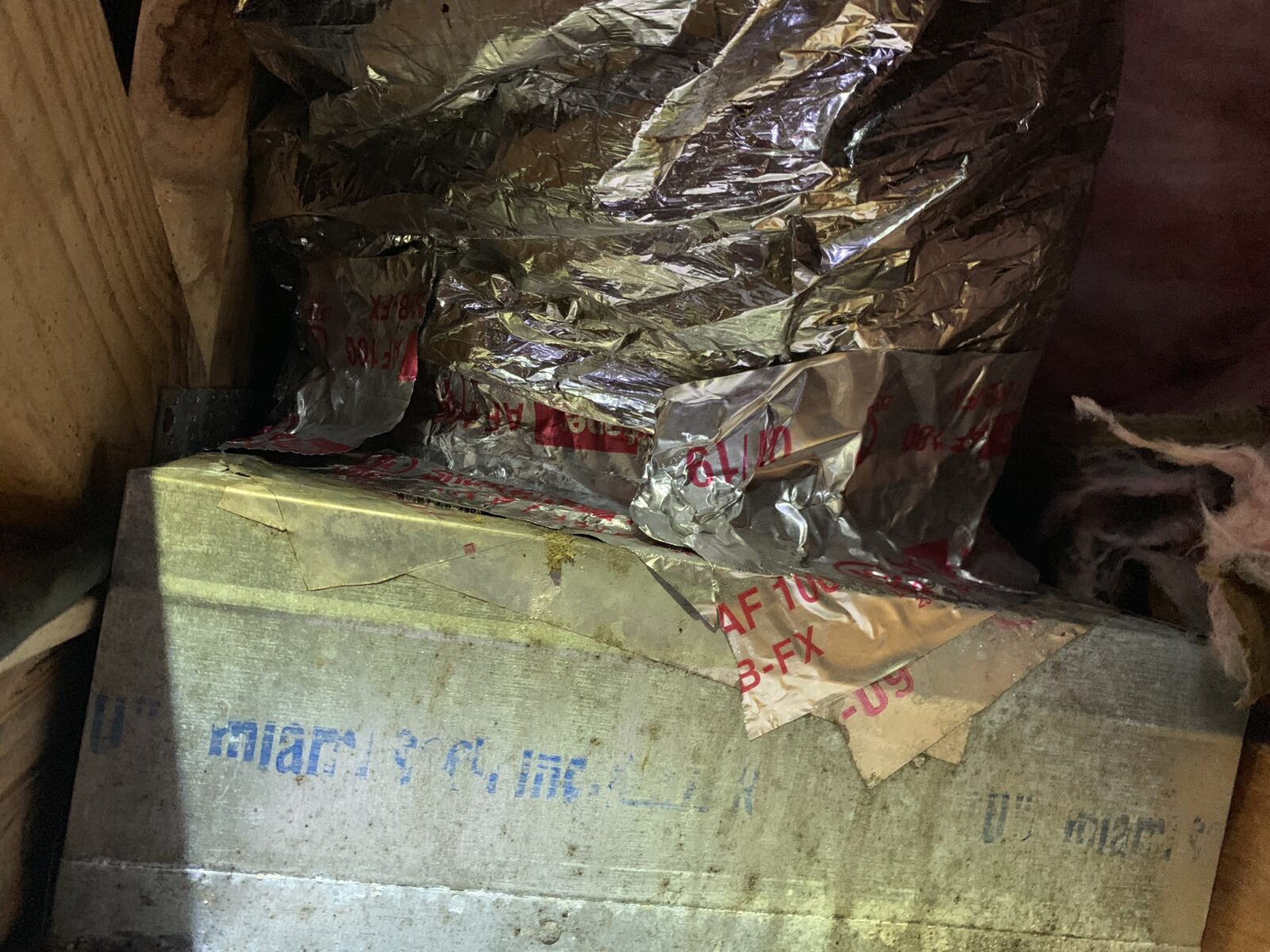
The three kinds of duct you'll find
Flexible duct ("flex")
Flex is a plastic inner tube reinforced with a spiral wire, wrapped in batted fiberglass insulation, and finished with a foil layer that reflects heat away. It's very cleanable and typically lasts roughly 30 years up in an attic. If your home was built from the 1990s onward, this is almost certainly what you've got.
Duct board (fiberboard)
Duct board is like a sheet of drywall — it comes in 4×8 sheets cut and folded into boxes and shapes, and it's also used as connection points for flex runs. You can build an entire system out of it, though more often it's mixed with flex. Here's the problem: older fiberboard has a serious downside. Back then the industry hadn't fully reckoned with the fact that mold only needs three things to thrive — moisture, darkness, and a food source — and old fiberboard offers all three. Pre-1990 fiberboard systems are often full of biological growth that simply cannot be cleaned out. If that's your home, replacement is the only honest answer. Sorry. And even on newer board, cleaning isn't recommended, because scrubbing can disturb the surface that seals the fiberglass and send particles blowing through your house.
Metal duct
Exactly what it sounds like — sheet metal in round, square, rectangular, or spiral shapes. (Next time you're in a brewpub, look up; that exposed spiral ducting is the same family.) Metal is very cleanable, but it hinges on age. In homes built from the 1960s through the 1980s you'll often find it, and if it's more than 30 years old it tends to be badly rusted. Run a cleaning machine through brittle, rusted metal and you risk the duct literally falling apart — which is, obviously, bad.
This is why the evaluation comes first. The right answer might be "clean it," "seal it then clean it," or "I'm sorry, this one needs to be replaced." You can't know which until somebody actually looks.
Beware the $9.95-per-vent flyer
You've seen the newspaper insert: "We'll clean your whole duct system — $9.95 per vent!" The old adage applies: if it sounds too good to be true, it just stood up and waved a giant red flag. From what I've seen, those outfits pull off the grille, jam a shop vacuum about two feet up the duct, and call it done. That is not a duct cleaning. Duct runs are at least five feet long and can stretch 30 to 40 feet depending on the layout. A real cleaning uses specialized equipment — a rotary brush system, or a high-horsepower vacuum (think a 20 HP unit with a 6-inch hose) paired with a brushing system — to actually scour the full length of every run.
How often should you clean?
Honest answer: it depends on you. If your system is properly sealed and you keep good filters on the air conditioner, every five years or so is plenty. If you're forgetful about filter changes, have a houseful of pets, recently did major construction, or have had a mold problem, then more often. This is where I send you right back to the evaluation, because that's what actually answers the question for your home. And while we're talking filters — the single cheapest thing you can do to keep ducts cleaner longer is run a quality pleated filter. (Here's the pleated MERV filter gear I'd recommend — placeholder link for now; just check it monthly.)
Cleaning ducts without sealing them is like detailing your truck and then driving straight into a mud bog. Five minutes later you're right back where you started.
The part everyone skips: sealing
Here's the most important thing in this whole article. Cleaning ductwork without making sure it's properly sealed makes about as much sense as getting your four-wheel-drive detailed and then immediately going mudding. Unsealed duct just pulls dust, dirt, mold spores, pollen, and allergens straight back in from the attic it lives in. Within months you're right back where you started, only poorer. If you're going to invest in cleaning, seal the system too — otherwise you're paying to clean a vacuum cleaner that's still running.
The bottom line
Get the evaluation, know what your ducts are made of, ignore the per-vent bargains, insist on real equipment, and seal before — or alongside — you clean. Do that and the air moving through your house is genuinely cleaner, not just freshly stirred.
I got home the other night and planned to do absolutely nothing — then I realized I'd never know when I was finished.
Home Whisperer out!!
About the author: Gregory Frazier is an HVAC estimator who has worked Maryland, Pennsylvania, Delaware, Virginia and Florida for 25+ years. He wrote a homeowner column for a decade and revived it here as The Home Whisperer. Read his story →