
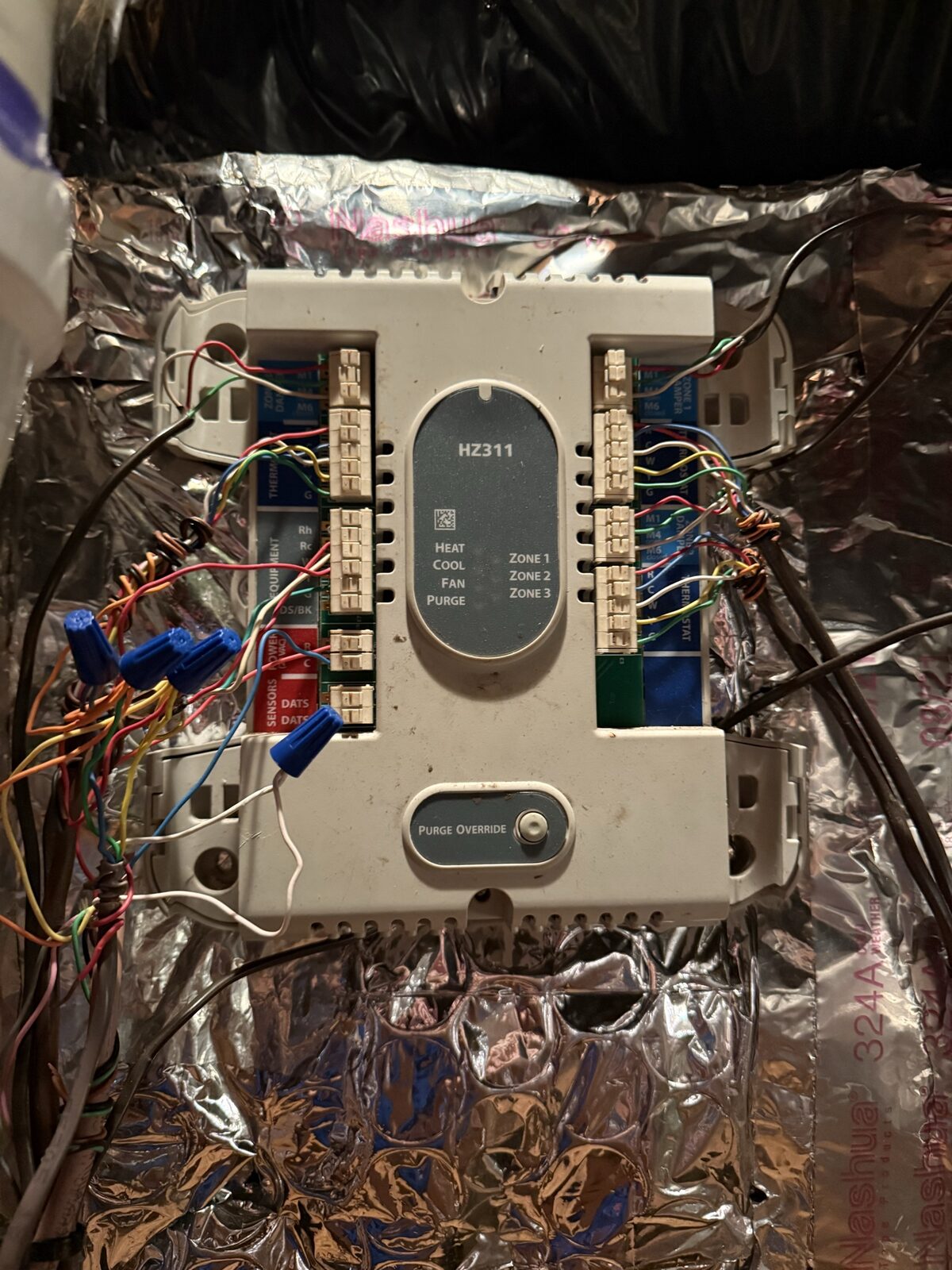
Be honest: you don't spend much time thinking about your thermostat. Why would you? For most of its history it did exactly one thing, and not even that well. The heart of the old units was a mercury bulb — charming, and wildly inaccurate, often holding the room within a sloppy three degrees of whatever you set if you were lucky. Then technology got hold of it, and the humble thermostat grew up fast.

From mercury bulb to the palm of your hand
If you've read anything about whole-home automation, you already know where this is going. Every major air conditioning manufacturer now makes its own wifi thermostat. You download an app to your phone or tablet, and just like that the thermostat lives in your pocket. You can see what your house is doing and change the temperature from anywhere — the office, the airport, the couch when you're too comfortable to get up. That's the baseline feature, and it's already a leap.
Better than a basic programmable
"But I already have a programmable thermostat." Right — and a programmable only works if your life runs on a fixed schedule. It assumes you leave at 8, return at 6, every single day. In the actual chaos of modern life, knowing exactly when you'll come and go is a rare luxury. A smart thermostat doesn't care that your schedule is a mess; you adjust it on the fly from your phone, so you're not cooling an empty house at 2pm because you happened to work late. That flexibility is where the real savings hide.
A programmable thermostat saves you money only if your week is predictable. A smart one saves you money because your week isn't — you adjust it from wherever you actually are.
The alerts that prevent the no-cool call
Here's the feature I wish more people knew about. Many of these platforms send you alerts. Some are gentle nags — "time to change your filter" — which is genuinely useful, since a clogged filter is behind a shocking number of comfort complaints. But the better ones can also tell you when something is off with the system itself, flagging a problem before it becomes the dreaded "no cool" situation on the hottest day of the year. An early heads-up turns an emergency into an appointment. (If you want to shop the category, here's the smart thermostat gear I'd recommend — placeholder link for now; one that nags you about the filter pays for itself.)
Whole-home control
The major brands have pushed well past temperature. Add a wireless gateway and the platform can expand to control your lighting, security cameras, door locks — basically any electrical device in the house. Now you've got one app running the whole place: lights on and off, doors locked and unlocked, cameras checked, and yes, the air conditioning.
When I first wired up the smart thermostat in my own house, I'll admit it: I had entirely too much fun freezing my wife out from the next room over.
And if you're wired like me, all that control opens up some prime practical-joke real estate. When I first installed the smart thermostat in my own home, I had a lot of fun discreetly freezing my wife out from the other room — not, I should stress, that I'm suggesting you use any of this technology for nefarious purposes. (She's read this column. I have to say that.)
The bottom line
A smart thermostat is one of the rare upgrades that's genuinely worth the upgrade: real accuracy, control from anywhere, savings that survive an unpredictable schedule, and alerts that head off breakdowns. It's the cheapest piece of "smart home" that actually earns its keep. If you want it to play nicely with the rest of your comfort setup, my piece on fall AC maintenance is a good companion read.
I asked my old mercury thermostat how it was feeling about retirement. It just gave me the cold shoulder.
Home Whisperer out!!
About the author: Gregory Frazier is an HVAC estimator who has worked Maryland, Pennsylvania, Delaware, Virginia and Florida for 25+ years. He wrote a homeowner column for a decade and revived it here as The Home Whisperer. Read his story →