
Let me set the stage. I'm on the fifth floor of a beautiful high-rise condo. The new owner called me out for a duct-cleaning quote, and he could not be happier — he just bought the place and is days from moving in. He tells me the one thing he absolutely cannot have is mold; he'd been seriously ill in his last home because of it, which is exactly why he wants the ducts cleaned before a single box comes through the door.
The unit is gorgeous. Walls freshly painted in soft blues. New tile flooring that looks just like hardwood. A stunning kitchen with light gray cabinets, all stainless appliances, countertops arriving any day. Bright white ceilings, a beautiful new chandelier hung and waiting for a dining room full of laughter. You've got the picture. He's living the dream.
Then I started looking
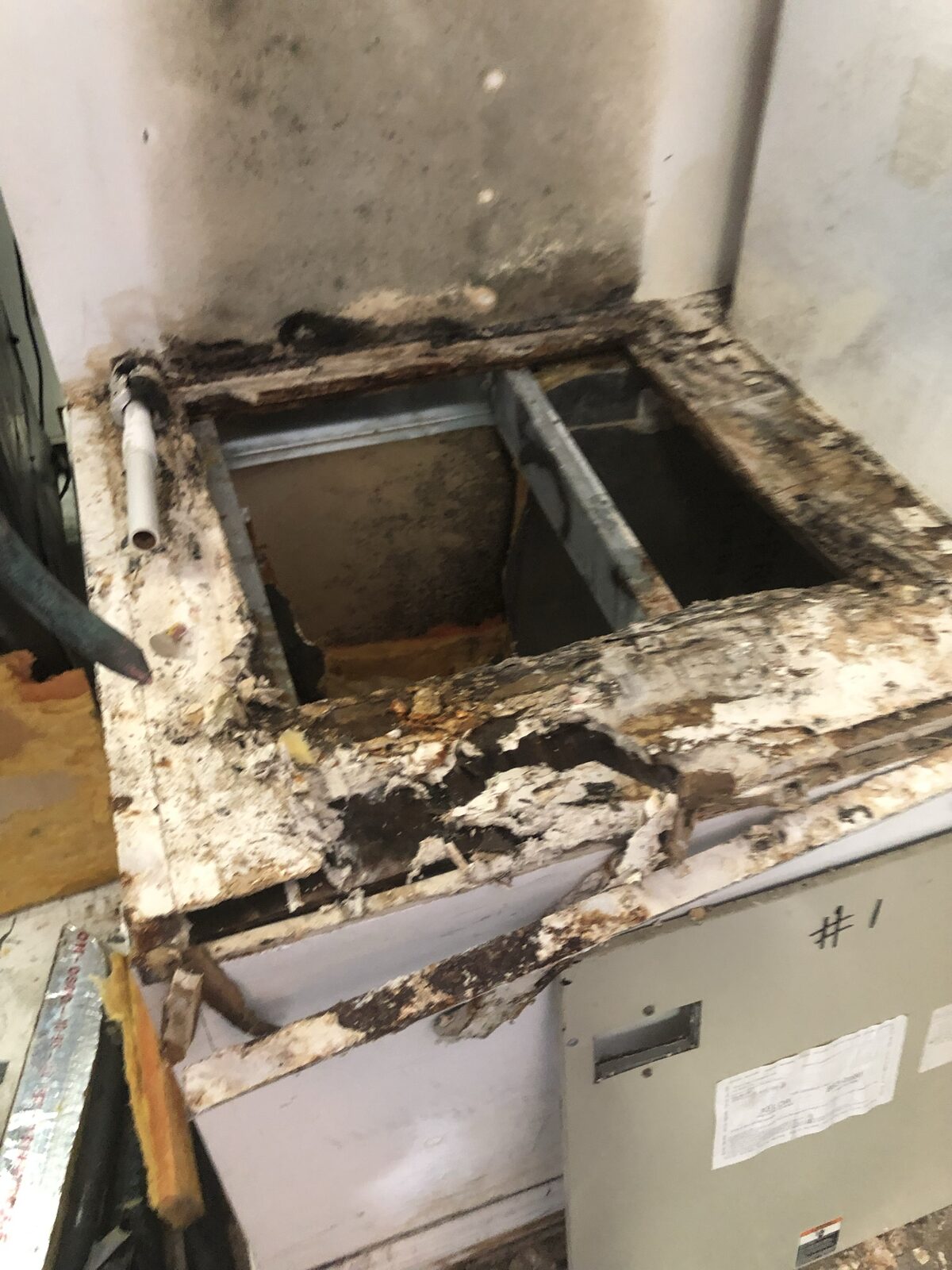
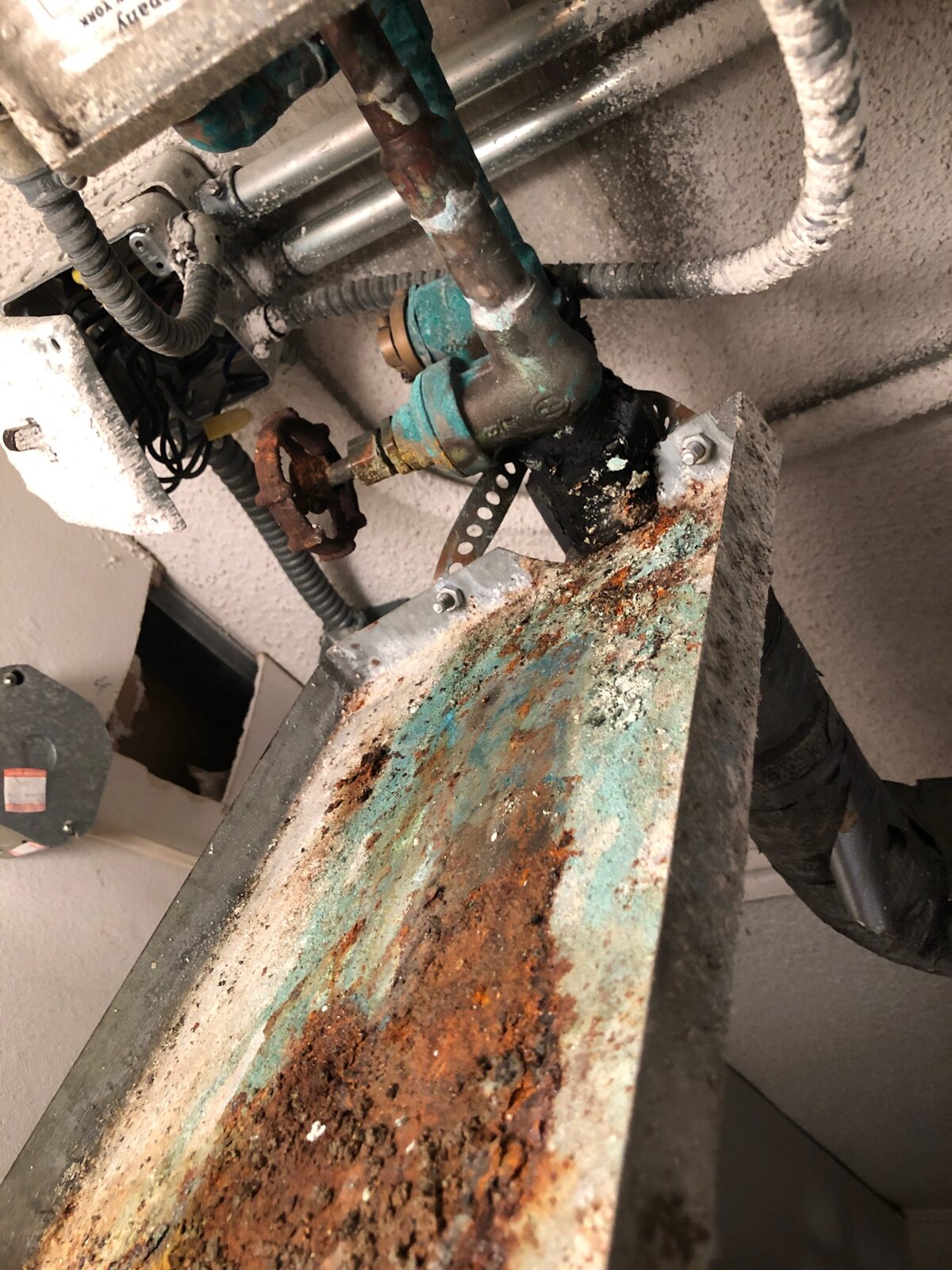
I begin inspecting the duct system — and find it's made of a material that, unfortunately, cannot be cleaned. Deeper in, I find an air conditioner 15 years old and so rusted I was honestly afraid to breathe on it for fear it would crumble. The topper: a water heater at the ripe old age of 23. Then I pulled a couple of supply vents down and saw the inside of the ducts — pure black with biological growth. For a man who got sick from mold, this was a nightmare hiding behind fresh paint.
And remember, this is a condo. Replacing that duct system means cutting a whole lot of holes in those freshly painted walls and ceilings he just paid for.
That 23-year-old water heater is a 50-gallon tank. The tank isn't the scary part — it's the roughly 5 gallons per second that keeps coming until someone shuts the water off. If it lets go while no one's home and it takes 15 minutes to catch it, that's around 5,000 gallons — pouring down onto four floors of neighbors below. Picture that insurance claim.
Ripping off the band-aid
The AC had to be replaced outright — rusted through in spots, certain to cause water damage soon, and with slim odds of ever cooling his new place properly. So I asked the obvious question: did you have a home inspection before you bought? "I did," he said, "and he didn't tell me any of this." Time to be honest with the man. I told him, as gently as I could, that he'd fallen victim to an inspector who missed some of the biggest issues in the home — and that making this place safe and healthy would mean an intensive construction project, redoing much of that beautiful cosmetic work, all of it landing somewhere in the five-figure range.
Enter grown man crying. Right there in his dream kitchen. He was so shattered he told me he'd just put the unit back on the market and make it someone else's problem. A shattered dream, start to finish, all because one person didn't do their job.
If I had a dollar for every time I've heard "the inspection report didn't say anything about that!" while crawling through an attic, I'd be writing this from a beach.
Why this keeps happening
I've got nothing against home inspectors as a group — they serve a real purpose and give buyers a baseline sense of what they're walking into. My gripe is that most inspection reports I see don't go deep, especially on the two systems that cost the most to fix: plumbing and air distribution. Inspectors are jacks of all trades, and as the old saying goes, masters of none. They know a little about everything and rarely a lot about any one thing.
Plumbing: the pipe you can't see
If the home was built before 1972, there's a high chance the sewer line is cast iron — which has a typical life of 40 to 50 years and is one of the most expensive systems in the whole house to replace. A standard inspector can tell you about the visible fixtures and the age of the water heater. What they can't tell you is the condition of the sewer line buried under the house. The only way to truly know is a camera inspection. A sewer replacement can easily top $20,000; the couple hundred dollars for a camera run can be priceless.
Ductwork: "yup, there's a duct system"
On the air side, the typical inspection gives you the equipment's age, maybe the indoor coil's surface condition, and any obvious flaws. When it comes to the ducts, far too often the inspector pops his head into the attic, says "yup, there's a duct system," and climbs back down. They generally don't evaluate duct condition, airflow-driven comfort problems, or whether the home even has enough return air. And while you're up there — rodents wreck ductwork constantly, tearing holes and fouling insulation; I covered that whole mess in attic invaders.
What a specialist actually brings
A specialist shows up with tools a generalist doesn't carry: a camera for sewer inspection (essential on pre-1974 cast iron), thermal imaging to spot hidden leaks and duct losses, a blower door to measure how leaky the envelope is, and a flow hood to verify airflow room by room. The cost for this kind of deeper testing typically ranges from a basic AC exam around $69 up to a full-home workup near $399 — pocket change against a five-figure surprise after closing.
The bottom line
If this is the year a new home comes your way, get the standard inspection — and then call a specialist who fixes these systems for a living to look at the plumbing and the ductwork before you sign. We see the things generalists miss, because it's the only thing we do. My homeowner on the fifth floor wishes someone had told him that one house too late.
This story doesn't get a pun — some of them I just let sink in.
Home Whisperer out!!
About the author: Gregory Frazier is an HVAC estimator who has worked Maryland, Pennsylvania, Delaware, Virginia and Florida for 25+ years. He wrote a homeowner column for a decade and revived it here as The Home Whisperer. Read his story →